
Introduction
Seydou Keita is widely regarded as one of the most intelligent and disciplined midfielders to emerge from Africa.This tai xiu online platform will provide you with information about this player’s biography. Born on January 16, 1980, in Bamako, Mali, Keita built a career defined by consistency, tactical awareness, and quiet leadership. Known by nicknames such as “Seydoubilen” and “Seydou đỏ,” he carries a rich football heritage as the nephew of Salif Keita.
From his early steps in European football to becoming a key figure in one of the most dominant teams in history, Keita’s journey reflects resilience, adaptability, and a deep understanding of the game.
Early Career and Development

First Steps at Olympique Marseille
Seydou Keita began his professional journey with Olympique Marseille, making his debut in September 1999. Although his time at the club was brief, it marked the beginning of his exposure to high-level European football. Seeking more opportunities to develop, he soon moved to a different environment where his talent could grow.
Growth at FC Lorient
Keita’s move to FC Lorient proved to be a crucial step in shaping his career. Playing as a defensive midfielder, he demonstrated strong positional awareness and discipline. Over 58 appearances, he scored once, but his true value lay in his ability to control tempo and support both defense and attack.
During this phase, Keita began attracting attention from bigger clubs due to his composure on the ball and intelligent distribution.
Establishing Leadership at RC Lens
After two years at Lorient, Keita joined RC Lens, where his career took a significant leap forward. He was quickly entrusted with the captain’s armband, highlighting his leadership qualities at a relatively young age.
Over four seasons, Keita made 156 appearances and scored 19 goals. His offensive contributions increased notably, showing his evolution into a more complete midfielder. He combined defensive strength with attacking efficiency, becoming a central figure in the team’s tactical setup.
Breakthrough Success at Sevilla
A Defining Season in Spain
On July 11, 2007, Keita signed with Sevilla, marking his entry into La Liga. His impact was immediate. In his first season, he made 31 appearances and scored 4 goals, including a memorable strike against Real Madrid.
This period showcased Keita’s ability to perform at the highest level. His versatility allowed him to operate in multiple midfield roles, while his physical presence and technical skills made him a valuable asset.
European Recognition
Keita’s performances in Spain also extended to European competitions. On November 27, 2007, he scored his first UEFA Champions League goal against Arsenal. This achievement further elevated his reputation across Europe and attracted interest from elite clubs.
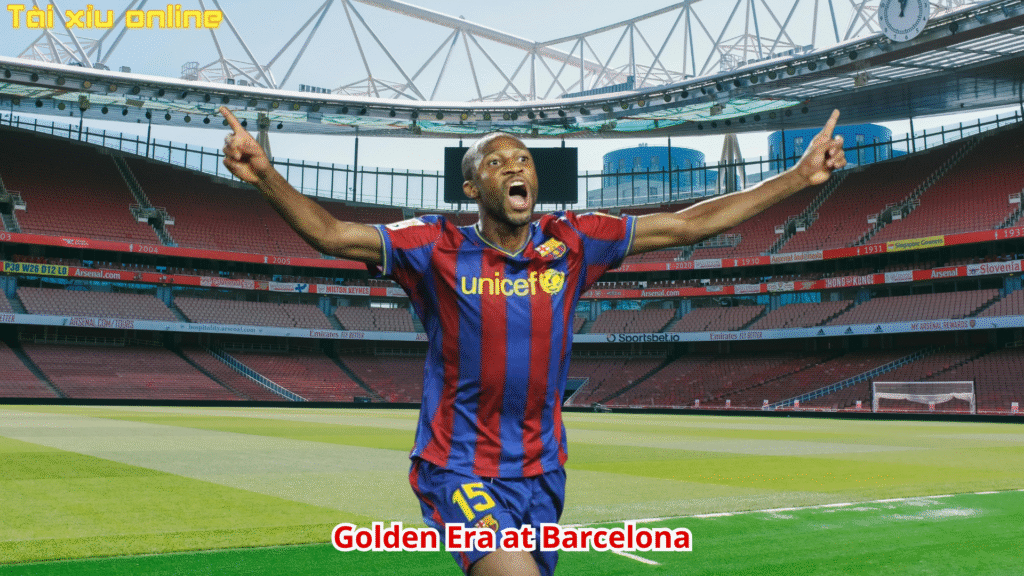
Golden Era at Barcelona
Historic Transfer and New Challenges
On May 26, 2008, Seydou Keita signed with Barcelona for approximately €14 million, becoming the first Malian player in the club’s history. His arrival coincided with the beginning of a golden era under a system that emphasized possession and tactical discipline.
Keita adapted quickly, making his Champions League debut for the club against Wisła Kraków and his La Liga debut against CD Numancia. His first league goal came on November 16, 2008, against Recreativo de Huelva.
Role in a Dominant Team
Although not always in the spotlight, Keita played a crucial role in Barcelona’s success. His tactical intelligence allowed him to balance the midfield, support defensive transitions, and contribute offensively when needed.
He was part of a team that achieved remarkable success, including domestic and international titles. In the UEFA Champions League final against Manchester United, he came on as a substitute, demonstrating his importance as a reliable squad player.
Tactical Intelligence and Adaptability
Keita’s strength was not just in his physical attributes but in his understanding of the game. He could read situations quickly, position himself effectively, and execute passes with precision. His ability to adapt to different tactical systems made him indispensable.
Interestingly, discussions about strategy and probability in sports often intersect with analytical concepts similar to those found in fields like online dice game, where decision-making and calculated risks play a role. Keita’s gameplay reflected a comparable level of strategic thinking.
Later Career and Transition
Move to Dalian Aerbin
After leaving Barcelona due to tax-related circumstances in Spain, Keita continued his career with Dalian Aerbin. His experience and professionalism helped him adapt to a new football environment, contributing both on and off the pitch.
Continued Influence
Even in the later stages of his career, Keita remained a respected figure. His discipline, work ethic, and leadership qualities made him a role model for younger players.
In modern digital contexts, structured platforms such as an app online dice game uy tín emphasize reliability and performance consistency—qualities that Keita consistently demonstrated throughout his football journey.
International Career with Mali
Seydou Keita also enjoyed a distinguished international career with the Mali national team. He represented his country in numerous tournaments and was widely regarded as one of Africa’s finest midfielders.
His playing style was characterized by:
- Excellent passing accuracy
- Strong ball control
- Effective long-range shooting
- Tactical discipline
Keita’s presence in midfield provided stability and creativity, making him a cornerstone of the national team.
Playing Style and Strengths

Technical Excellence
Keita possessed refined technical skills, allowing him to control the ball under pressure and maintain possession effectively.
Tactical Awareness
One of his defining traits was his ability to read the game. He anticipated movements, intercepted passes, and positioned himself intelligently.
Leadership and Mentality
As a captain and experienced player, Keita led by example. His calm demeanor and professionalism earned him respect across teams.
Versatility
He could play in multiple midfield roles, from defensive to attacking positions, adapting to different tactical demands.
Legacy and Influence
Seydou Keita’s legacy extends beyond statistics. He represents a generation of players who combined intelligence, discipline, and adaptability to succeed at the highest level.
His journey from Bamako to the pinnacle of European football serves as an inspiration for aspiring athletes. Keita proved that consistent performance, combined with strong character, can lead to lasting success.
Conclusion
Seydou Keita’s career is a testament to the power of intelligence and discipline in football. From his early days in France to his peak years in Spain, he consistently demonstrated professionalism and tactical excellence.
His contributions to both club and country highlight the importance of teamwork, adaptability, and strategic thinking. app tài xỉu online uy tín to understand the essence of a complete midfielder, Keita’s story offers valuable insights.
As football continues to evolve, the qualities embodied by Seydou Keita remain timeless. His legacy continues to inspire new generations, encouraging them to approach the game with dedication and intelligence.